Winter poses significant challenges for asphalt driveways due to the material’s porous composition. Asphalt naturally absorbs moisture from rain, snow, and melting ice. When temperatures drop, this trapped water freezes and expands, widening existing cracks and creating new damage. Understanding how to protect your asphalt during cold months helps extend its lifespan and prevents costly repairs.
Choose the Right Snow Removal Tools
Metal shovels create scratches, gouges, and surface damage that compromise your asphalt’s integrity. These imperfections become entry points for water infiltration during freeze-thaw cycles.
Use plastic shovels with rounded edges for snow removal. Begin clearing snow early, before accumulation compacts into thick layers. Hold your shovel at a shallow angle against the pavement surface rather than driving it vertically into packed snow. This technique minimizes surface contact and reduces the risk of creating divots that will expand into cracks.
Apply De-Icing Products Carefully
Most commercial de-icers contain harsh chemicals that deteriorate asphalt binders and accelerate pavement breakdown. Rock salt, while effective at melting ice, is particularly damaging to asphalt surfaces and surrounding landscaping.
When de-icing becomes necessary, select products specifically formulated as asphalt-safe. Apply these sparingly and only to areas where ice poses a safety hazard. Sand provides traction without chemical damage, making it a practical alternative for many situations.
Consider Professional Snow Removal Services
Professional snow removal companies have equipment and expertise that minimize driveway damage. They understand proper plow blade height settings and appropriate de-icing product selection for different pavement types.
Specify that plow blades should remain at least one-quarter inch above your asphalt surface. This clearance prevents gouging while still removing accumulated snow effectively. Research local providers by asking neighbors for recommendations and checking online reviews before hiring.
Remove Leaves and Debris Before Winter
Organic debris traps moisture against your asphalt surface. When temperatures fluctuate, this moisture repeatedly freezes and thaws, accelerating pavement deterioration. Accumulated leaves also block sunlight that would otherwise help melt ice naturally.
Clear your driveway of fallen leaves, twigs, and other debris throughout autumn. This simple maintenance step reduces moisture retention and allows solar warming to reach your pavement during winter days.
Inspect for Early Warning Signs
Regular winter inspections help identify problems while they remain manageable. Small cracks indicate water infiltration and freeze-thaw damage. Shallow depressions suggest base deterioration beneath the surface.
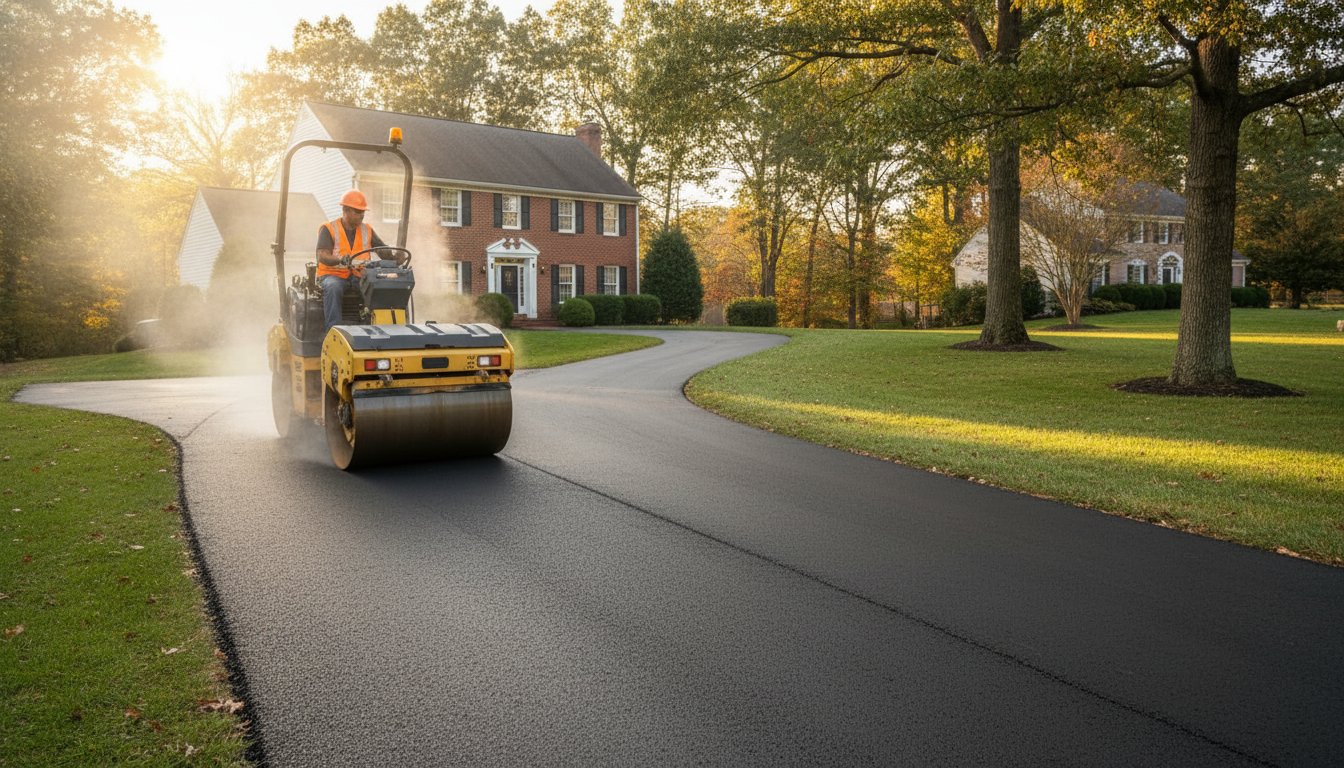
Newly installed asphalt should not develop cracks or potholes during its first winter if properly maintained. If you notice these issues appearing on new pavement, review your maintenance practices. For existing driveways, document problem areas for repair scheduling when spring arrives.
Schedule Sealcoating for Long-Term Protection
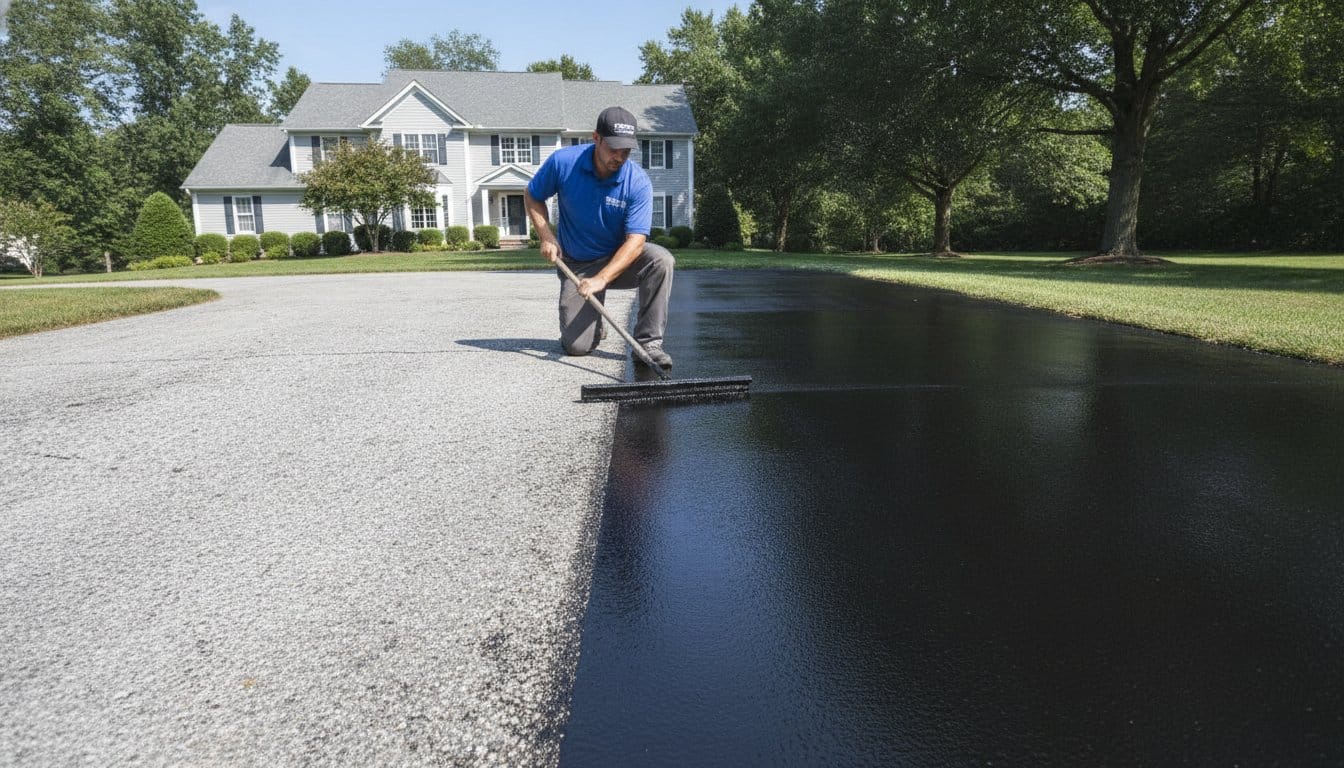
Sealcoating creates a protective barrier that prevents water penetration and shields asphalt from winter weather damage. This treatment fills minor surface imperfections and extends pavement life by several years.
New driveways need their first sealcoating application six to twelve months after installation. Existing asphalt requires resealing every three to five years, depending on traffic levels and weather exposure. Sealcoating must be applied during warm, dry weather, making fall the ideal scheduling window before winter arrives.
Contact a Paving Professional
Address asphalt damage promptly to prevent minor problems from becoming expensive replacements. Capital Paving & Sealcoating provides free estimates and professional guidance for all asphalt maintenance needs. Early intervention protects your investment and keeps your driveway safe throughout winter. Reach out today to discuss your asphalt care requirements.