Parking Lots: Sealcoating and Crack Filling
A parking lot is usually the first thing customers, tenants, and visitors notice. If the surface looks gray, cracked, or patched over, the property feels neglected before anyone even steps inside. Sealcoating and crack filling keep your asphalt looking cared for and help you avoid the bigger repair cycles that come from water damage.
Capital Paving and Sealcoating provides commercial sealcoating and crack filling across Anne Arundel County, including Gambrills, Annapolis, Crofton, Severna Park, Odenton, and surrounding areas. We work with retail sites, medical offices, schools, marinas, apartment communities, HOAs, and private commercial drives.
What Commercial Sealcoating Does
Sealcoating is a protective layer applied over asphalt after it cures. Its job is to slow the normal aging process that breaks pavement down from the top. In Maryland, asphalt wears out faster because of sun exposure in summer, salt and freeze-thaw cycles in winter, and steady traffic year-round.
A properly applied sealcoat helps by:
- Blocking moisture from soaking into porous asphalt
- Reducing UV oxidation that dries and brittles the surface
- Protecting against oil, gas, and chemical spills
- Restoring a clean, uniform black finish
- Making future crack filling and patching less frequent
Sealcoating does not fix structural problems. It protects asphalt that is still stable, and it keeps small surface issues from turning into deep failures.
Why Asphalt Cracks and Fades
Commercial pavement takes daily abuse from weather, vehicle fluids, and heavy turning loads. The most common causes of breakdown in Anne Arundel County are:
- Water infiltration and freeze-thaw cycles
- UV exposure that oxidizes the surface
- Winter salt treatments that speed surface drying
- Gas, oil, and vehicle fluids that soften asphalt
- Repeated turning and braking in traffic lanes
When asphalt dries out and cracks, water moves into the openings. That water freezes, expands, and weakens the gravel base. Crack filling stops that damage early. Sealcoating protects the broader surface so fewer cracks form in the first place.
When Sealcoating Makes Sense
Commercial sealcoating is usually the right move when the pavement is aging, but the base underneath is still stable. You are in the right window for sealcoating if:
- The lot has faded from black to gray
- Fine surface cracks are starting to show
- Water no longer beads on the surface
- The asphalt feels dry or porous
- Striping is fading and the lot looks tired
Sealcoating works best as scheduled maintenance, not as a last-minute rescue.
When Sealcoating Is Not Enough
Sealcoating cannot solve base failure or severe surface breakup. You likely need patch repair, resurfacing, or rebuilding if you see:
- Cracks wider than about an inch, with crumbling edges
- Potholes forming around crack networks
- Soft spots or sinking sections
- Areas where asphalt is breaking apart in chunks
- Widespread cracking across large sections of the lot
- Drainage failures that leave standing water after rain
In these cases, we address structural repairs first, then sealcoat after the surface is stable again.
How Commercial Crack Filling Works
Crack filling is the first step in protecting asphalt. We clean cracks thoroughly to remove debris, vegetation, loose asphalt, and moisture. Then we install commercial-grade rubberized sealant that flexes with temperature swings instead of cracking open again.
Crack filling is most effective when done before winter. That timing blocks freeze-thaw damage before it can widen cracks into potholes.
How Commercial Sealcoating Works
- Surface inspection
We check cracking patterns, traffic flow, and drainage to confirm the pavement is ready for sealcoat. - Cleaning and prep
The lot is cleared of debris and vegetation. Oil spots are treated so the coating bonds properly. - Crack filling and patch repair first
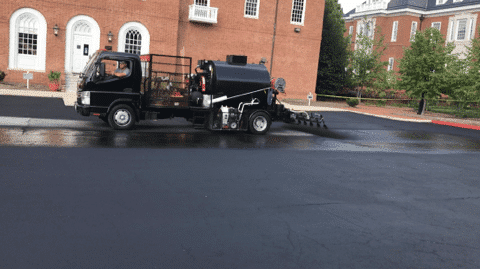
Cracks and soft spots are sealed or repaired before the protective coating goes down. - Sealcoat application
Sealcoat is applied in thin, even coats for consistent curing and durability. - Cure time and reopen
Most lots are ready for traffic in 24 to 48 hours, depending on heat and humidity.
Sealcoating and Crack Filling Cost and Timeline
Commercial crack filling is usually priced by linear foot, based on crack width, depth, and how much prep the surface needs. Commercial sealcoating is usually priced by square foot. Cost depends on lot size, surface condition, number of coats needed, and how staging must be handled to keep your site accessible.
In Maryland conditions, crack filling typically protects pavement for about 18 months to 3 years on busy commercial lots. Sealcoating is generally recommended every 2 to 3 years after the asphalt has cured. Lots with heavier traffic or more sun exposure may need maintenance sooner.
Most small to mid-size commercial lots can be sealed in one to two days, with staging plans used when access must remain open.
Crack Filling vs Sealcoating
These services work together but solve different problems.
- Crack filling seals openings so water cannot reach the base.
- Sealcoating protects the broader surface from sun, moisture, salt, and chemical exposure.
Cracks should always be filled first. Sealcoating comes after, once the surface is stable and sealed.
Common Mistakes Property Owners Make
- Waiting until cracks turn into potholes
- Sealcoating over unfilled cracks
- Skipping cleaning and oil-spot prep
- Letting drainage problems continue year after year
- Choosing maintenance based on price alone instead of base condition
A lot that gets maintained early costs less over its lifetime and stays safer for traffic.
Why Choose Capital Paving and Sealcoating
We are a third-generation family business serving Anne Arundel County since 1956. Our crews are licensed and insured, and we bring commercial-grade equipment to every job. We focus on correct prep, clean application, and honest recommendations on what your lot needs now and what can wait.