
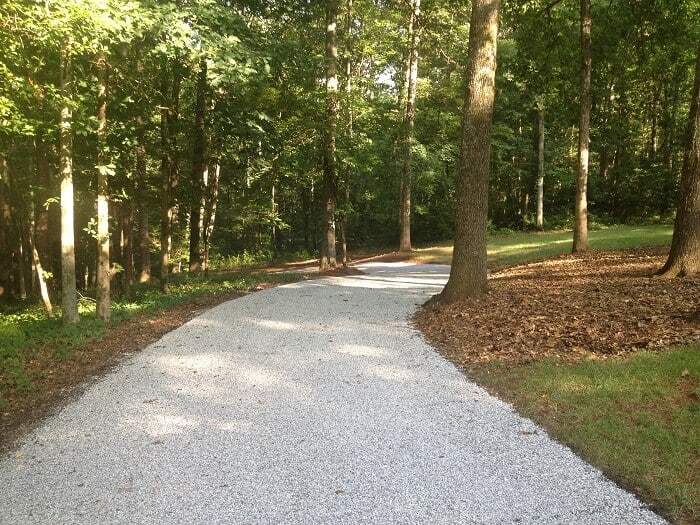
Are you looking for an alternative to Asphalt?
A gravel driveway can be a smart choice when you need a long, durable surface without the cost of asphalt. It works especially well on rural properties, long lanes, and sites where drainage or traction matters more than a paved finish. The key is building it the right way from the start. A gravel driveway laid without a stable base will rut, wash out, and require constant repairs.
Capital Paving and Sealcoating installs gravel driveways across Anne Arundel County, including Gambrills, Annapolis, Crofton, Severna Park, Odenton, and nearby areas. We have built driveways for local properties since 1956, using licensed and insured crews and the same base and grading standards we use on larger roadway work.
What a Gravel Driveway Is
A gravel driveway is a layered stone surface designed to handle traffic while allowing water to drain through or off the drive rather than pool. Unlike asphalt, gravel is not a sealed surface. It relies on proper depth, compaction, and shape to stay stable over time.
A good gravel driveway has enough structural stone to spread weight, enough compacted material to keep the surface firm, and a finished top layer that drives smoothly without drifting into the yard.
Why Gravel Makes Sense in Maryland
Many Anne Arundel County properties have clay-heavy soil that holds water. When a driveway is built without solid drainage and base work, the soil softens and the surface starts to sink or rut. Gravel can perform well here because it drains through the surface instead of trapping water on top.
Gravel also fits Maryland properties where:
- Driveways are long and paving costs add up quickly
- The setting is rural or wooded and a natural surface looks right
- Winter traction matters on slopes
- Future property changes may require shifting the driveway
- You want a stable drive without committing to full paving yet
Problems with Proper Gravel Installation Prevent
When a gravel driveway is built correctly, it prevents the issues people usually blame on the gravel itself.
Washboarding
The rippled surface that forms in summer comes from loose top material over a weak base. A stable, compacted structure reduces vibration and keeps the surface smooth longer.
Deep ruts and potholes
These almost always start when water sits on the driveway or the base is too thin. Proper crown and depth keep water moving and protect the foundation.
Gravel migration into lawns
Drifting stone is usually an edge and grading problem. A driveway needs containment and shoulders that hold material where it belongs.
Sink spots in traffic zones
If the bottom layer is not strong enough or the soil is not compacted, the driveway settles under repeated wheel paths. Base design prevents that slow collapse.
When Gravel Is the Right Choice
Gravel is a good fit when you want a long drive built at a lower upfront cost ,and you are comfortable with periodic maintenance. It is especially strong for:
- Long private lanes and shared driveways
- Homes with wide entrances or parking pads
- Rural or waterfront properties where runoff control matters
- Seasonal cabins and low to moderate traffic locations
- Sites with steep grades where traction is a priority
If you want a low-maintenance surface with no periodic grading, asphalt may be a better long-term match. The right choice depends on how you use the driveway and what you want to maintain.
What Proper Gravel Construction Requires
A gravel driveway is not just one layer of stone dumped on dirt. It needs structure.
Three-layer system
- Bottom structural layer
Large aggregate forms the load-bearing base. This layer prevents the driveway from sinking into native soil. - Middle binding layer
Smaller stone fills gaps between the larger rocks and build strength. - Top driving layer
Finer gravel compacts firmly to create the smooth surface you drive on.
Total depth is adjusted to the site. Most residential gravel drives need six to twelve inches of compacted stone. Clay soils and heavy vehicle use require thicker construction.
Excavation and subgrade prep
We excavate to the depth your property requires, grade for drainage, and compact the native soil before stone goes down. If the soil is soft or holds water, we correct that before building on top of it.
Skipping this step is the number one reason gravel driveways fail early.
Drainage shaping
A gravel driveway has to shed water. We build crown or cross-slope so runoff moves off the surface instead of running down the lane or sitting in low spots. Good drainage keeps ruts and potholes from returning.
Edge containment
Gravel needs boundaries so it does not spread. Depending on the property, that might mean:
- Setting the driveway slightly below grade so lawn holds the edges
- Building graded shoulders that act like a curb
- Installing timber or stone edging where needed
Without containment, you lose gravel steadily and the driveway narrows over time.
What to Expect Long-Term
Gravel driveways are durable, but they are not maintenance-free.
- Grading redistributes stone, smooths ruts, and restores crown. Most residential drives need grading every few years, more often on steep or high-traffic sites.
- Top dressing adds fresh gravel as the surface wears or washes away. A well-built driveway usually goes five to ten years before needing a significant reload, but light topping every few years keeps it looking sharp.
- Drainage upkeep matters. Clearing ditches, culverts, and shoulders keeps runoff from cutting into the drive.
When the base is built correctly, maintenance is simple and predictable. When the base is thin, maintenance turns into constant patching.
Gravel Driveway Cost and Timeline
Gravel driveway installation is typically priced by square foot, based on excavation depth, base thickness, stone type, and the amount of grading needed for drainage. Long or steep driveways cost more because they require more material and shaping work.
Most residential gravel driveways can be installed in one to three days once the site is prepared, with longer timelines for long private lanes or properties that need heavier excavation.
Common Mistakes Homeowners Make
- Choosing gravel without planning for drainage
- Adding stone on top of a weak or muddy base instead of rebuilding it
- Using one-size gravel instead of a layered system
- Letting edges erode so the driveway loses width
- Waiting too long to regrade after ruts start
- Hiring a contractor who skips compaction
A gravel driveway is forgiving, but only to a point. The foundation still matters.