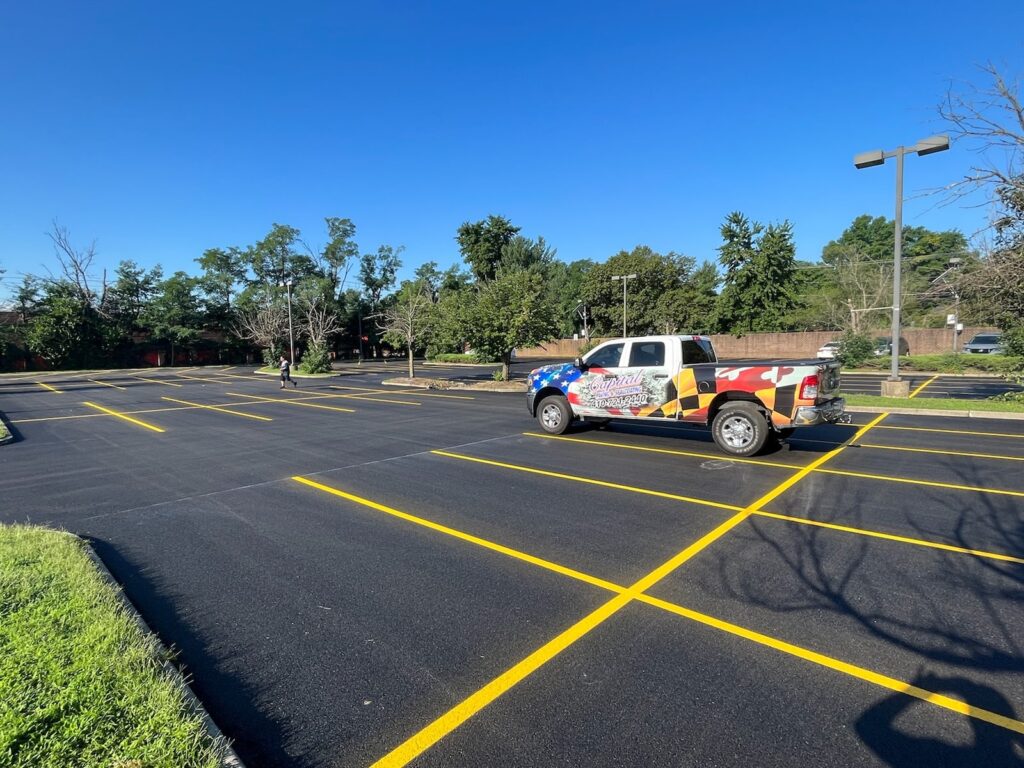
If your parking lot stripes are fading, confusing, or out of date, the surface might still be in good shape but the site feels disorganized. Drivers start parking crooked. Fire lanes get blocked. ADA spaces are hard to spot. Small layout problems turn into complaints or liability issues quickly. Line striping and marking fixes that without tearing up the lot.
Capital Paving and Sealcoating provides line striping and marking for commercial properties across Anne Arundel County, including Gambrills, Annapolis, Crofton, Severna Park, Odenton, and nearby areas. We are a family business since 1956, and our licensed and insured crews handle new layouts, restriping after resurfacing, and compliance updates for active sites.
What Line Striping and Marking Is
Line striping and marking is the process of laying out and painting traffic lines and symbols on asphalt. It includes both standard parking lot striping and the safety or compliance markings that guide vehicles and pedestrians.
A complete line striping and marking service may include:
- Parking stall lines and end caps
- Drive lanes and turning guides
- Directional arrows and stop bars
- Crosswalks and pedestrian zones
- Fire lane markings
- Loading zones and no-parking areas
- ADA parking spaces and access aisles
- Curb numbers, signage placement, and traffic flow updates
- Layout changes after paving or resurfacing
The goal is simple. Make the lot clear to use, safe to move through, and consistent with current code.
Why It Matters for Maryland and Anne Arundel County Properties
Parking lots in Anne Arundel County take steady wear from sun, rain, and winter salt. Even when the asphalt holds up, striping does not. UV exposure fades paint. Snow plows scrape lines in high-traffic areas. Pooled water weakens markings faster in low spots.
That matters because faded markings are not just cosmetic.
- Parking stalls lose definition and reduce usable spaces.
- Drivers improvise their own lanes, which increases risk.
- Fire lanes become less obvious and get parked in.
- ADA spaces can fall out of compliance as markings fade.
- Pedestrian routes disappear, especially at crosswalks.
Line striping and marking is the low-cost maintenance step that keeps a lot functioning the way it was designed to.
Problems Line Striping and Marking Solves or Prevents
Faded or missing parking lines
When stall lines fade, parking becomes messy, spacing gets wasted, and complaints follow. Fresh line striping restores order and helps the lot carry the traffic volume it was built for.
Unsafe traffic flow
Lots without clear drive lanes or arrows invite wrong-way traffic and tight turning conflicts. Marking lanes and installing directional arrows prevents avoidable fender benders.
Fire lane confusion
Fire lanes need to be obvious and readable. Clear fire lane striping and curb markings reduce the risk of blocked access and code issues.
ADA non-compliance risk
ADA parking spaces need visible stall markings and access aisles. If they fade, the spaces may still exist, but they are not clearly designated. Line striping and marking keeps the site compliant and easy for residents or customers to use.
Crosswalk and pedestrian safety gaps
Pedestrian routes wear off faster than parking lines. Repainting crosswalks, stop bars, and walk zones helps protect foot traffic in busy retail, office, school, and community lots.
Layout that no longer fits site use
Over time, a property changes. New tenants bring more traffic. Dumpster areas shift. Delivery patterns expand. Striping updates can rework stall count and lane geometry without rebuilding asphalt.
When Line Striping and Marking Makes Sense
Most commercial sites benefit from restriping when you see:
- Lines that are thin, patchy, or hard to follow
- Parking stalls that no longer hold clear shape
- Arrows and stop bars that are almost invisible
- ADA spaces that are difficult to locate
- Fire lane markings that are fading or broken
- A resurfaced lot with no new layout yet
- A change in traffic flow or stall needs
If the asphalt is stable but the lot feels chaotic, line striping and marking is usually the right next step.
When Line Striping Is Not Enough
Striping is not a fix for pavement failure. If the lot surface is breaking down, markings will not last and the layout may not hold its shape.
Line striping should wait if:
- The surface is actively crumbling or scaling
- Potholes and patch zones are widespread
- Cracking is severe enough to distort stall edges
- Water pools across large areas
- A resurfacing or overlay is already planned soon
In those cases, pavement repair or resurfacing comes first. Striping is the finish step once the surface is stable.
How the Process Works
A clean striping job depends on prep and layout accuracy as much as paint.
- Site review and layout check
We confirm existing layout, ADA requirements, fire lanes, and any changes you want. If you need a new plan, we measure and mark a fresh layout before striping begins. - Surface cleaning
Striping goes on clean asphalt. Dirt, loose debris, and surface residue get cleared to ensure adhesion. - Marking and alignment
We snap control lines and guide marks first. This keeps stalls square, lanes straight, and spacing consistent across the lot. - Paint application
We apply commercial-grade pavement marking paint in clean, even passes. Multiple thin layers hold up better than a single heavy coat. - Symbols and specialty markings
ADA symbols, arrows, stop bars, crosswalks, and curb markings are installed to match the approved layout. - Dry time and reopening
Most striping dries quickly in normal weather. We stage work to keep access open when possible.
Cost and Timeline Expectations
Line striping and marking is usually priced by the linear foot or by the section, depending on lot complexity. ADA symbols, stencils, and specialty markings are typically priced per unit.
Cost changes based on:
- Total lot size and number of stalls
- Amount of layout change versus straight restriping
- Number of ADA spaces and access aisles
- Fire lanes, crosswalks, arrows, and stop bars needed
- Curb striping or numbering
- Staging requirements for active properties
- Surface condition and prep time
Many small to mid-size lots can be restriped in a single day. Larger sites or layouts with multiple specialty zones may take longer, especially when work is staged around business hours.
Common Mistakes Property Owners Make
- Waiting until lines are gone instead of restriping when they first fade
- Ignoring ADA access aisle and symbol clarity
- Repainting over dirty or oily asphalt, which causes early peeling
- Keeping an outdated layout that no longer fits traffic volume
- Skipping fire lane refresh until after a compliance notice
- Restriping before surface repairs, then needing to redo it after paving
Regular restriping costs less than letting a lot drift into disorder or non-compliance.